MONDAY, JUNE 26, 2025


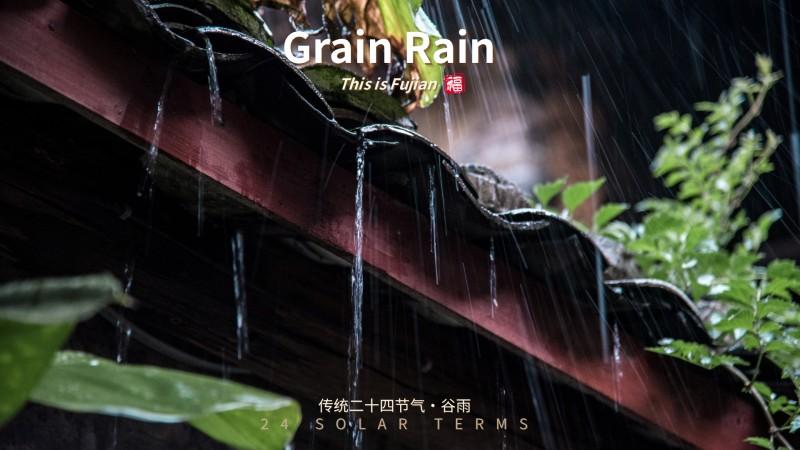
Grain Rain is the final line of spring’s poem.
At this time of year, the rains grow more frequent, and everything unfolds in a rhythm that feels just right. As the ancients said, “rain nourishes the grains,” giving Grain Rain a gentle, life-giving quality, both a farewell and a new beginning.
Around Grain Rain, peonies come into full bloom. There’s a saying: “See the peonies over the three days of Grain Rain,” which is why they’re also known as the “Grain Rain flower.” In the mountains of Fujian, places like Xuefeng Temple in Minhou and Changyang Temple in Xiapu offer a stunning scene where ancient temples meet flourishing blossoms, vivid reds, soft pinks, and elegant whites. Against grey tiles and mossy walls, the flowers look like a slowly unfolding spring painting. Walking among them, it’s hard not to be moved by such serene yet abundant beauty.
It’s also from this time that tea becomes especially captivating. After storing energy through the winter, tea plants sprout tender new leaves in the spring rain. These leaves are soft in texture, fresh in aroma, and known as “Grain Rain tea.” Whether in the layered tea hills of Anxi or the rolling green fields of Fuding, there’s a faint fragrance of tea in the air. Even in the city, stepping into an ordinary teahouse, you can taste a sip of spring, clear, gentle, and calming, inviting you to slow down.
There’s also a simple custom called “walking during Grain Rain.” On this day, people step outside, into the mountains or across the fields, to watch plants grow and let both body and mind stretch and breathe. Places like the terraced fields of Liancheng or the Fuzhou Forest Trail are especially enchanting in late spring, where layers of green extend into the distance. When the wind passes through, even time itself seems to slow.
Have a cup of new tea, watch flowers in bloom, take a walk. Say a proper goodbye to spring, and leave yourself a little calm and quiet anticipation for the days ahead.